From Wikipedia
Open on Wikipedia
| Heterotheca subaxillaris | |
|---|---|

| |
Scientific classification 
| |
| Kingdom: | Plantae |
| Clade: | Embryophytes |
| Clade: | Tracheophytes |
| Clade: | Angiosperms |
| Clade: | Eudicots |
| Clade: | Asterids |
| Order: | Asterales |
| Family: | Asteraceae |
| Genus: | Heterotheca |
| Species: | H. subaxillaris
|
| Binomial name | |
| Heterotheca subaxillaris | |
| Synonyms[2] | |
|
Synonymy
| |

Heterotheca subaxillaris, known by the common name camphorweed,[3] is a North American species of flowering plant in the family Asteraceae.[4]
Distribution and habitat
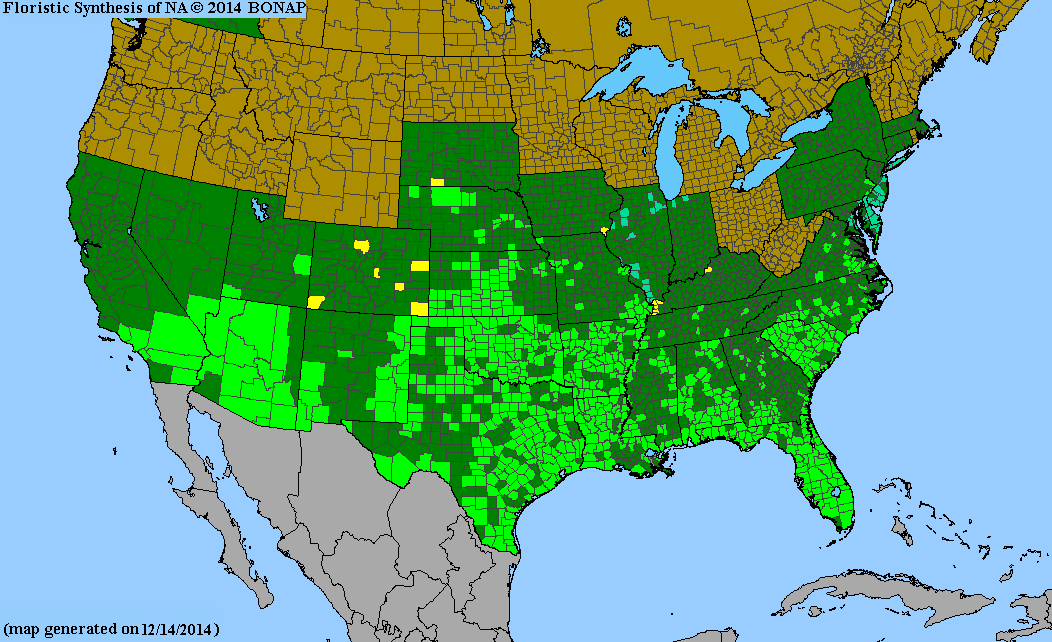
[edit]It is widespread across much of the United States (from California to Massachusetts) as well as Mexico and Belize.[5][6]
H. subaxillaris may be found in habitats such as upper beaches, longleaf pine-wiregrass savannas, and pine-scrub oak sand ridges.[7]
Description
[edit]Heterotheca subaxillaris is a perennial, aromatic herb up to 203 centimeters (80 inches or 6 2/3 feet) in height, often with several erect stems. The stems are hairy to bristly. The inflorescence contains 3-180 flower heads in a flat-topped array. Each head contains 15–35; yellow ray florets surrounding 25–60 disc florets at the center.[8]
Ecology
[edit]
Sandy parts are common habitat for H. subaxillaris. They thrive in prairies with high sand content. Human-disturbed areas are also preferred, such as roadsides or waste areas.
Camphorweed florets are adapted to suit generalist pollinators to an equal or greater extent than specialists, such as plasterer bees. Other bees are the most common of these generalist visitors, collecting nectar and pollen in exchange for transferal of male gametes between flowers.
Larvae of insects such as brown flower moths and agromyzid flies feed on the stems and/or flower heads of the camphorweed.
[9][10]
Chemistry
[edit]The leaf volatiles from which the name "camphorweed" is derived include camphor, but as a minor constituent (less than 2%); of 41 documented volatiles, for example, caryophyllene, pinene, borneol, myrcene, and limonene each comprised over 5% of the total.[11]
References
[edit]- ^ "Heterotheca subaxillaris. NatureServe Explorer 2.0". explorer.natureserve.org. Retrieved 22 July 2025.
- ^ The Plant List, Heterotheca subaxillaris (Lam.) Britton & Rusby
- ^ NRCS. "Heterotheca subaxillaris". PLANTS Database. United States Department of Agriculture (USDA). Retrieved 21 July 2015.
- ^ Discover Life, Heterotheca subaxillaris (Lam. ) Britton &. Rusby, camphorweed
- ^ SEINet, Southwestern Biodiversity, Arizona chapter photos, description, partial distribution map
- ^ Biota of North America Program 2014 county distribution map
- ^ Lonard, Robert I., Frank W. Judd, and Richard Stalter. “Biological Flora of Coastal Dunes and Wetlands: Heterotheca Subaxillaris (J. De Lamarck) N. Britton & H. Rusby”. Journal of Coastal Research 27.6 (2011): 1052–1058.
- ^ Flora of North America, Heterotheca subaxillaris (Lamarck) Britton & Rusby, 1887.
- ^ Olsen KM. Pollination effectiveness and pollinator importance in a population of Heterotheca subaxillaris (Asteraceae). Oecologia. 1996 Dec;109(1):114-121. doi: 10.1007/PL00008811. PMID: 28307601.
- ^ Camphorweed. Illinois Wildflowers.
- ^ Lincoln, D.E., B.M. Lawrence. 1984. The volatile constituents of camphorweed, Heterotheca subaxillaris. Phytochemistry 23(4):933-934
External links
[edit]
 | This Astereae article is a stub. You can help Wikipedia by adding missing information. |